

The Invisible Work
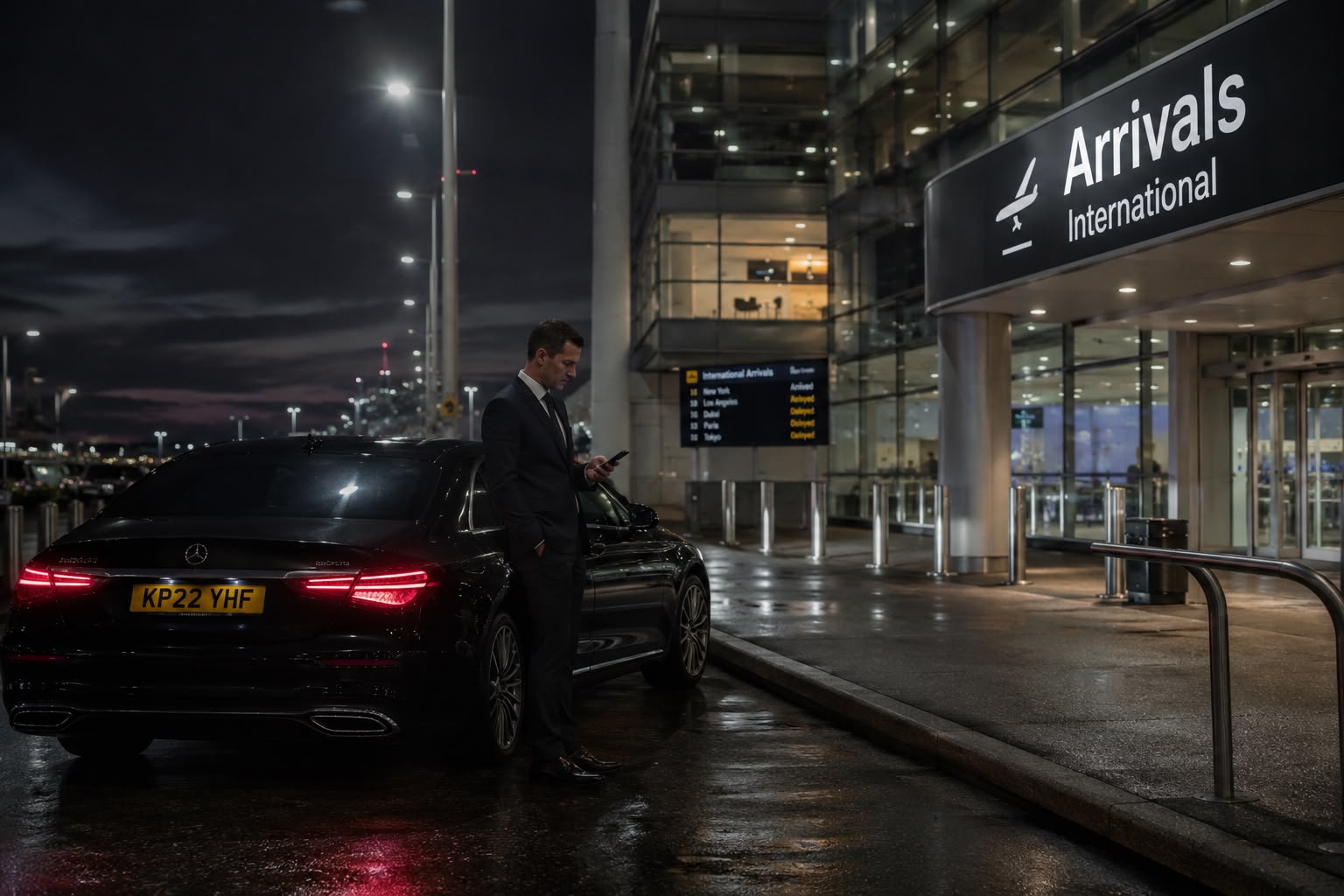
The measure of ground transport is not what happens when everything goes to plan. Anyone can collect a guest from a flight that lands on time. The real measure is what happens when the flight is three hours late, the schedule collapses, and a tired traveller is suddenly arriving at a moment nobody planned for.
That is when the work begins — and the best version of that work is invisible, because the guest never finds out it was needed.
Late flights are not the exception. Analysis of recent aviation data suggests nearly one in four flights runs late or is cancelled. The disruption is systemic, not occasional. Most delays are minor. But a meaningful share run from thirty minutes to three hours — which is precisely the range that quietly dismantles a carefully built schedule.
Here is what that looks like from the ground, where I work. A flight slips by two hours. The chauffeur assigned to that arrival is now needed elsewhere, because the original timing no longer holds. The guest, already weary, is about to land expecting a car — and has no idea that the plan made for them three days ago no longer fits the world they are arriving into. In that gap, between the schedule that was and the situation that is, the entire quality of a ground operation is decided.
The poor version of this is familiar to every business traveller. You land late, you open the app, and you join the same scramble as everyone else on the delayed flight — surge pricing, cancellations, a car that may or may not come, a system that has no idea you were expected and no memory that you matter.
The delay is rarely the real injury. The injury is being left alone to manage it.
The good version is almost entirely hidden. A flight is tracked before it lands, so the delay is known before the guest has even cleared the aircraft. The chauffeur is reassigned quietly. A new plan forms while the traveller is still taxiing. And when they walk into arrivals — late, tired, braced for the usual fight for a car — there is simply someone waiting, with their name, as though the delay had changed nothing at all.
The work was considerable. The guest's experience of it was nil. That is the entire point.
I think about this often, because it is where technology and human judgement have to meet. The monitoring — knowing the flight has slipped, seeing the whole operation on one screen, reassigning in real time — is what makes the recovery possible. But the monitoring alone does not meet the guest at the kerb, read their tiredness, and decide in the moment what they need. The platform handles the complexity so that a person is free to handle the human being.
There was an arrival, during a programme we ran in Cambridge, that captures it. A guest reached the airport a full day early — on no schedule, expected by no one, through a mix-up that gave us no warning at all. A chauffeur happened to be routed nearby. Within minutes, a three-way conversation was running between the organiser, the guest and the chauffeur; the car was redirected, the guest met, and brought to the venue without delay. She never knew anything had gone wrong.
It cost us a great deal of quiet effort. It cost her nothing — not even the knowledge that effort had been required.
You cannot photograph a disaster that didn't happen.
This is the part of the service that is hardest to sell, because its whole nature is to be unnoticed. You cannot put “the delay your guest never felt” on an invoice. But it is, in the end, the thing companies are actually paying for when they choose managed ground transport: not the car, but the assurance that when the difficult day comes — and one in four flights says it will — someone is already handling it.
The best journeys are the ones with no story to tell. Behind a surprising number of them is a great deal of work you were never meant to see.